辅助wifi优化
(邱浩昱 文超凡)
Abstract
We propose a Generative Predictor-based Input Optimization framework to achieve deterministic low latency in stochastic dual-band Wi-Fi networks. By shifting from reactive heuristics to differentiable predictive control, our system enables one-shot adaptation of traffic splits across heterogeneous links, minimizing latency and enhancing video fluency in real time.
Key Contributions
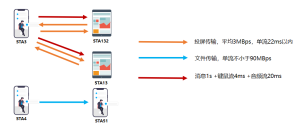
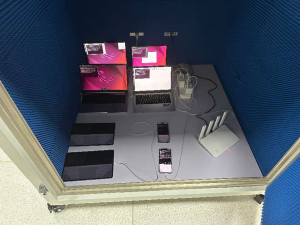
We measure the current communication interference environment by recording the RTT (round-trip time) and throughput when video is transmitted between devices. The continuous transmission of files between computers causes interference on both the 5GHz and 2.4GHz channels.
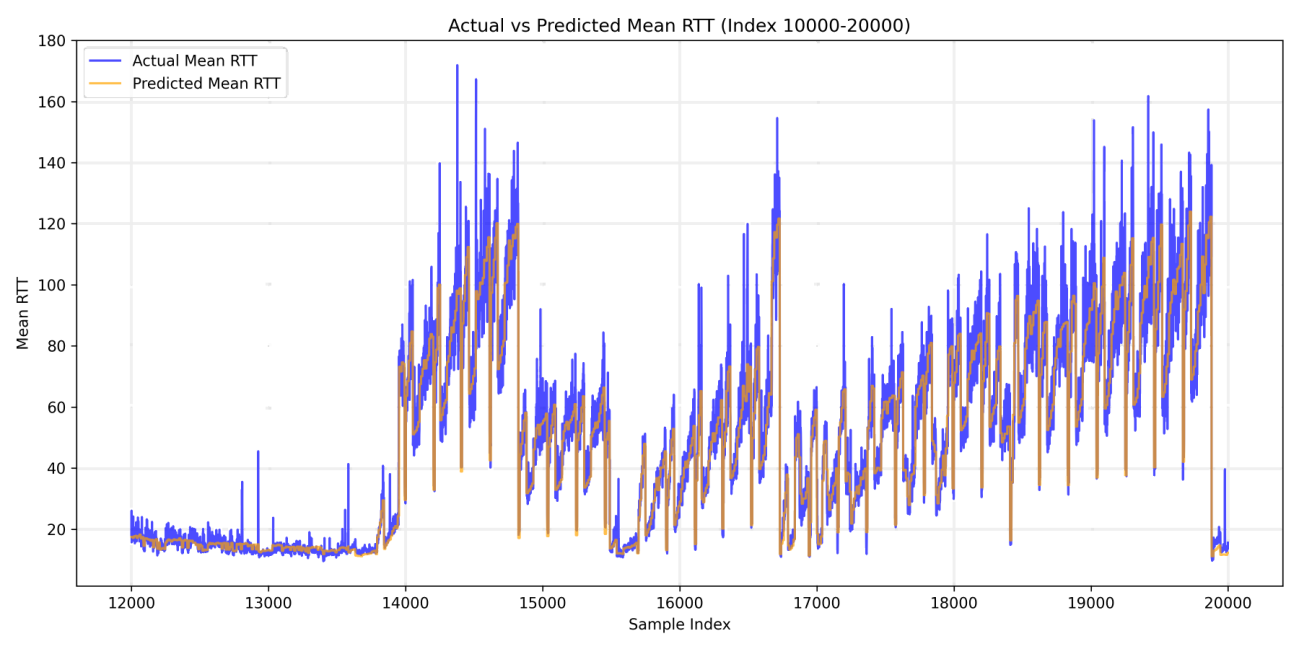
Neural networks are utilized to predict the channel and optimize the future allocation ratio in advance.
Experimental results & effects
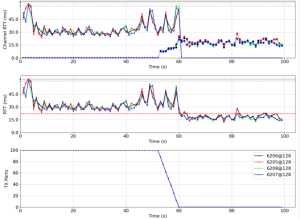
Through the learning of neural networks, we can achieve the prediction of future transmission RTT, and use this to adjust the allocation ratio of transmission, thereby reducing the overall RTT and improving the communication throughput.